



Solving the Multi-Cloud Management Crisis
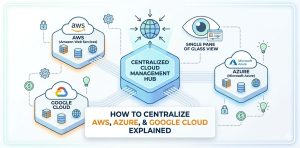
Centralizing multi-cloud management involves consolidating disparate workloads from AWS, Azure, and Google Cloud into a single, unified operational framework. Engineers solve the “multi-cloud crisis” by implementing cross-platform orchestration tools, centralized identity management, and unified monitoring to eliminate visibility gaps. This strategic consolidation ensures consistent security policies and prevents cost overruns across diverse cloud infrastructure environments in 2026. By utilizing a “single pane of glass” approach, businesses can achieve higher uptime and streamlined DevOps workflows.
The Escalating Crisis of Multi-Cloud Fragmentation
Enterprise environments often suffer from severe fragmentation when using multiple cloud providers simultaneously. This crisis occurs because each provider uses unique APIs, console interfaces, and resource tagging structures. Without centralization, IT teams must manage three different security models and three different billing cycles. This fragmentation leads to “operational siloing” where data remains trapped in specific provider ecosystems. Consequently, businesses face increased complexity that hampers agility and slows down software deployment cycles.
Identifying the Root Cause of Multi-Cloud Complexity
The root cause of the multi-cloud crisis is the lack of a standardized abstraction layer. Engineers often find that what works for AWS server management does not translate directly to Azure or Google Cloud support. Each provider has its own way of handling networking, such as AWS VPCs versus Azure Virtual Networks. This discrepancy forces engineers to learn platform-specific nuances for every task. Over time, this leads to configuration drift and inconsistent security postures across the organization’s global footprint.
How Engineers Centralize Multi-Cloud Governance
Engineers begin the centralization process by deploying infrastructure-as-code (IaC) tools like Terraform or Pulumi. These tools allow teams to define resources for all three providers using a single, declarative language. By standardizing the deployment code, engineers ensure that a server in Azure follows the same hardening rules as one in AWS. This eliminates the need to manually configure each cloud console. Furthermore, engineers implement unified IAM (Identity and Access Management) through protocols like SAML or OIDC.
Step-by-Step Integration of AWS Azure and Google Cloud
The first step in centralization involves setting up a global monitoring hub using tools like Datadog or New Relic. Second, engineers establish secure cross-cloud connectivity using dedicated interconnects or encrypted VPN tunnels. Third, they implement a centralized logging server, such as an ELK Stack (Elasticsearch, Logstash, Kibana). This allows security teams to search for threats across all clouds from one interface. Finally, they apply global tagging policies to track costs and resource ownership accurately.
Real-World Production Scenario: The Hidden Latency Issue
In a live production environment, a company might host their frontend on AWS while their database sits on Google Cloud. Engineers often encounter mysterious “504 Gateway Timeout” errors due to inter-cloud latency. A junior admin might blame the application code for the slowness. However, a senior infrastructure engineer investigates the network hops between the two providers. They look for packet loss or high jitter that occurs during peak traffic hours.
Technical Diagnosis via Network and System Logs
Engineers diagnose these inter-cloud bottlenecks using tools like mtr (My Traceroute) and tcpdump. They run mtr -rw googlecloud-db-instance.internal from an AWS EC2 instance to visualize the path. If they see high latency at a specific network peer, they know the route is suboptimal. They also check /var/log/syslog for “connection reset by peer” errors. These logs often indicate that a firewall in one cloud is dropping packets from another due to a timeout.
Commands for Cross-Cloud Resource Auditing
Engineers use the command line to audit resources across multiple environments quickly. For example, using the AWS CLI and Azure CLI in a combined script helps find orphaned disks. A command like aws ec2 describe-volumes --query 'Volumes[?State==available].VolumeId' identifies unused AWS storage. Simultaneously, they run az disk list --query "[?managedBy==null].id" to find unattached Azure disks. Running these audits weekly prevents the “cloud sprawl” that drives up monthly enterprise infrastructure costs.
Configuration Snippets for Unified Monitoring Agents
Centralization requires installing a single monitoring agent that reports to a central dashboard. Engineers often use a cloud-init script to automate this during server provisioning. A typical configuration snippet for a monitoring agent like Prometheus Node Exporter ensures the metrics service starts on boot. They use systemctl enable node_exporter and systemctl start node_exporter on every Linux instance. This ensures that every server, regardless of the provider, sends its telemetry data to the same Prometheus server.
Security Impact: Managing the Multi-Cloud Attack Surface
Managing security across AWS, Azure, and Google Cloud support is a massive challenge. A single misconfigured S3 bucket or an open Azure Blob storage can lead to a data breach. Engineers mitigate this by using Cloud Security Posture Management (CSPM) tools. These tools automatically scan all cloud environments for compliance with standards like CIS or HIPAA. If an engineer opens port 22 to the world on a Google Cloud instance, the CSPM sends an immediate alert.
Performance Optimization through Global Load Balancing
To solve performance issues, engineers deploy Global Server Load Balancing (GSLB) through providers like Cloudflare or Akamai. This allows traffic to be routed to the healthiest cloud provider in real-time. If AWS US-East-1 experiences an outage, the GSLB automatically redirects users to the Azure West-Europe region. This level of redundancy is only possible when cloud monitoring and maintenance are centralized. It ensures that the end-user never experiences a service interruption.
Best Practices for Patch Management in Multi-Cloud
Patch management must be automated across all cloud environments to ensure security. Engineers use Ansible playbooks to push security updates to Linux server management services across providers. They target instances based on tags rather than IP addresses to maintain flexibility. For example, an Ansible command like ansible-playbook -i cloud_inventory.py patch_kernel.yml can update 500 servers simultaneously. This consistency reduces the window of vulnerability for the entire organization.
Comparison Insights: Centralized vs Decentralized Management
Decentralized management leads to higher costs and significant security risks. Centralized management, however, provides a single source of truth for all infrastructure assets. While decentralized teams move faster in the short term, they eventually hit a “complexity wall.” Centralized teams use white label support or NOC services to handle the repetitive tasks of server monitoring. This allows the core engineering team to focus on high-value architecture projects.
Real-World Case Study: Consolidating a Fintech Infrastructure
A fintech firm was struggling with $50,000 in monthly “hidden” cloud costs across three providers. Their DevOps infrastructure was a mess of manual scripts and undocumented changes. Our team stepped in to centralize their AWS server management and Azure cloud support. We migrated all manual configurations into Terraform scripts and implemented a centralized FinOps dashboard. Within three months, their cloud spend dropped by 25%, and their deployment frequency increased by 40%.
Debugging Inter-Cloud Identity and Access Issues
Identity management is often where multi-cloud centralization fails. Engineers frequently debug “Permission Denied” errors when a service in one cloud tries to access a resource in another. They check the IAM policy JSON files to ensure the “Principal” is correctly defined. Using the command aws iam simulate-principal-policy, engineers can test if a specific role has the right permissions. This systematic approach to debugging prevents security gaps and ensures smooth inter-cloud operations.
The Role of NOC Services in Centralized Cloud Management
A 24/7 NOC (Network Operations Center) is essential for maintaining centralized multi-cloud environments. The NOC team monitors the “single pane of glass” for any alerts from Nagios or Zabbix. If an Azure instance goes down at 3 AM, the NOC services team follows a predefined runbook to fix it. They don’t need to wait for the client to notice the downtime. This proactive approach is the difference between an enterprise that scales and one that fails.
Achieving 99.99% Uptime with Multi-Cloud Redundancy
Achieving high availability requires moving beyond a single-provider mindset. Engineers design “Active-Active” architectures where traffic is split between AWS and Google Cloud. This requires a centralized database synchronization strategy, such as using a globally distributed database like CockroachDB. By managing these components as a single unit, engineers ensure that even a total provider failure won’t kill the business. This is the ultimate goal of professional cloud infrastructure management.
FAQ: Multi-Cloud Management Challenges & Security
What causes the multi-cloud management crisis?
The crisis is caused by fragmented tools, inconsistent security policies, and “siloed” visibility across different providers.
How do engineers fix inter-cloud latency?
They use mtr to diagnose network paths and implement dedicated interconnects or optimized VPN tunnels.
How to prevent cost overruns in multi-cloud environments?
Implement global tagging policies and use centralized billing tools to track resource spend in real-time.
Why is centralized logging important for cloud security?
It allows security teams to correlate events across AWS, Azure, and Google Cloud to detect sophisticated cross-platform attacks.
Struggling with Traffic Spikes and Downtime?
Partner with our experts for reliable cloud auto-scaling, proactive monitoring, and high-availability infrastructure solutions.
Strategic Conclusion: Mastering the Multi-Cloud Future
Centralizing your cloud management is the only way to survive the complexity of 2026 infrastructure. By unifying AWS, Azure, and Google Cloud, you reduce risk and lower operational costs significantly. Use automation, centralized monitoring, and expert NOC services to keep your systems running smoothly. Start your centralization journey today to ensure your business remains competitive in an increasingly multi-cloud world.