




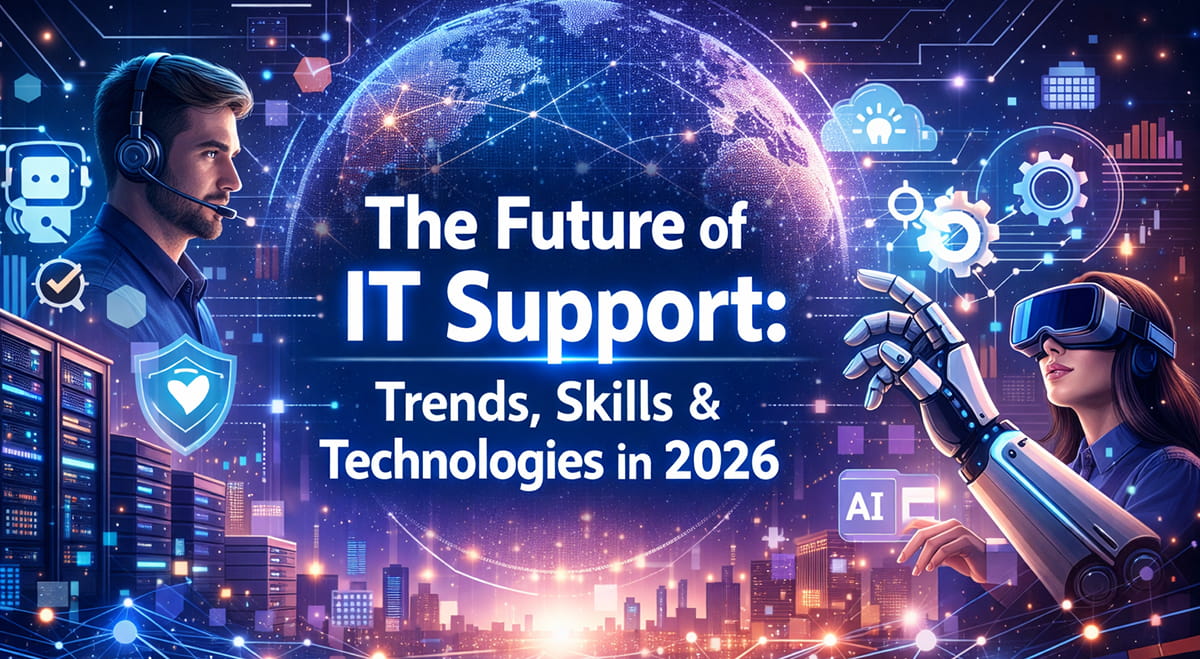
The Evolution of Technical Support
Technical support is no longer limited to reactive ticket handling or basic troubleshooting. As businesses become more digital, cloud-driven, and security-focused, the future of technical support is evolving rapidly. Organizations today are asking an important question: what’s next in technical support, and how can support teams stay relevant, scalable, and proactive?
This blog explores the future of technical support services, emerging technologies, evolving customer expectations, and the skills required to deliver modern, high-performance IT support in 2025 and beyond.
How Technical Support Is Changing
Traditional technical support models were largely reactive, responding to issues only after users reported problems. Modern technical support, however, is shifting toward proactive monitoring, predictive analytics, and automation. With the rise of cloud infrastructure, SaaS platforms, and distributed workforces, support teams are now expected to manage complex environments with minimal downtime.
The next generation of technical support focuses on preventing incidents, improving system reliability, and delivering seamless user experiences across platforms.
AI and Automation in Technical Support
Artificial intelligence is playing a major role in shaping the future of IT support. AI-powered chatbots, automated ticket classification, and intelligent monitoring systems are reducing response times and improving resolution accuracy. Instead of replacing human engineers, AI enhances their capabilities by handling repetitive tasks and providing data-driven insights.
Automation in technical support also enables faster incident resolution through auto-remediation scripts, predictive alerts, and intelligent escalation workflows. These advancements are especially valuable in 24/7 support environments where speed and consistency are critical.
The Rise of Proactive and Predictive Support
One of the most important trends in modern technical support is the shift from reactive to proactive service delivery. Predictive monitoring tools analyze system behavior, performance metrics, and historical incidents to identify potential failures before they impact users.
This proactive technical support approach reduces downtime, improves customer satisfaction, and helps businesses maintain high availability across servers, applications, and networks.
Remote and Cloud-Based Technical Support
As cloud adoption continues to grow, technical support teams are increasingly managing remote and hybrid environments. Cloud-based technical support enables centralized monitoring, remote troubleshooting, and real-time collaboration across global teams.
Support engineers must now understand cloud platforms, virtualization, containerized environments, and distributed systems. The future of technical support depends heavily on expertise in cloud infrastructure management and remote support tools.
Cybersecurity and Compliance in Technical Support
Security is becoming a core responsibility of technical support teams. Modern support engineers are expected to identify security risks, respond to incidents, and ensure compliance with data protection standards. This includes managing access controls, monitoring suspicious activity, and supporting incident response efforts.
As cyber threats continue to evolve, security-aware technical support will be a key differentiator for organizations offering managed IT services.
Skills Required for the Future of Technical Support
The future technical support engineer must combine technical expertise with problem-solving and communication skills. Knowledge of operating systems, cloud platforms, networking, and cybersecurity is essential. Equally important is the ability to explain complex issues clearly and maintain strong customer relationships.
Continuous learning will be critical as tools, platforms, and technologies evolve rapidly.
Technical Support: Then vs Now (Comparison)
| Aspect | Traditional Technical Support | Modern Technical Support |
| Approach | Reactive | Proactive and predictive |
| Tools | Manual troubleshooting | AI-driven automation |
| Environment | On-premise systems | Cloud and hybrid systems |
| Availability | Business hours | 24/7 global support |
| Focus | Issue resolution | Experience and prevention |
Why the Future of Technical Support Matters
Organizations that invest in modern technical support strategies gain a competitive advantage. Faster resolution times, reduced downtime, and improved user satisfaction directly impact business continuity and growth. As IT environments become more complex, the role of technical support will continue to expand beyond troubleshooting into strategic IT enablement.
Ready to future-proof your IT support?
Explore our modern 👉 technical support services and see how proactive, AI-enhanced support can keep your systems secure, stable, and scalable.
Frequently Asked Questions (FAQ)
What is the future of technical support?
The future of technical support focuses on AI-driven automation, proactive monitoring, cloud-based support, and security-focused service delivery.
Will AI replace technical support engineers?
AI will not replace engineers but will enhance their efficiency by handling repetitive tasks and providing intelligent insights.
What skills are needed for modern technical support?
Key skills include cloud computing, networking, cybersecurity awareness, automation, and strong communication abilities.
Why is proactive technical support important?
Proactive support helps prevent outages, reduce downtime, and improve overall system reliability.
Conclusion
What’s next in technical support is a shift toward intelligence, automation, and proactive service delivery. As businesses rely more heavily on digital infrastructure, modern technical support will play a critical role in ensuring stability, security, and scalability. Organizations that embrace these changes will be better prepared for the future of IT operations.