




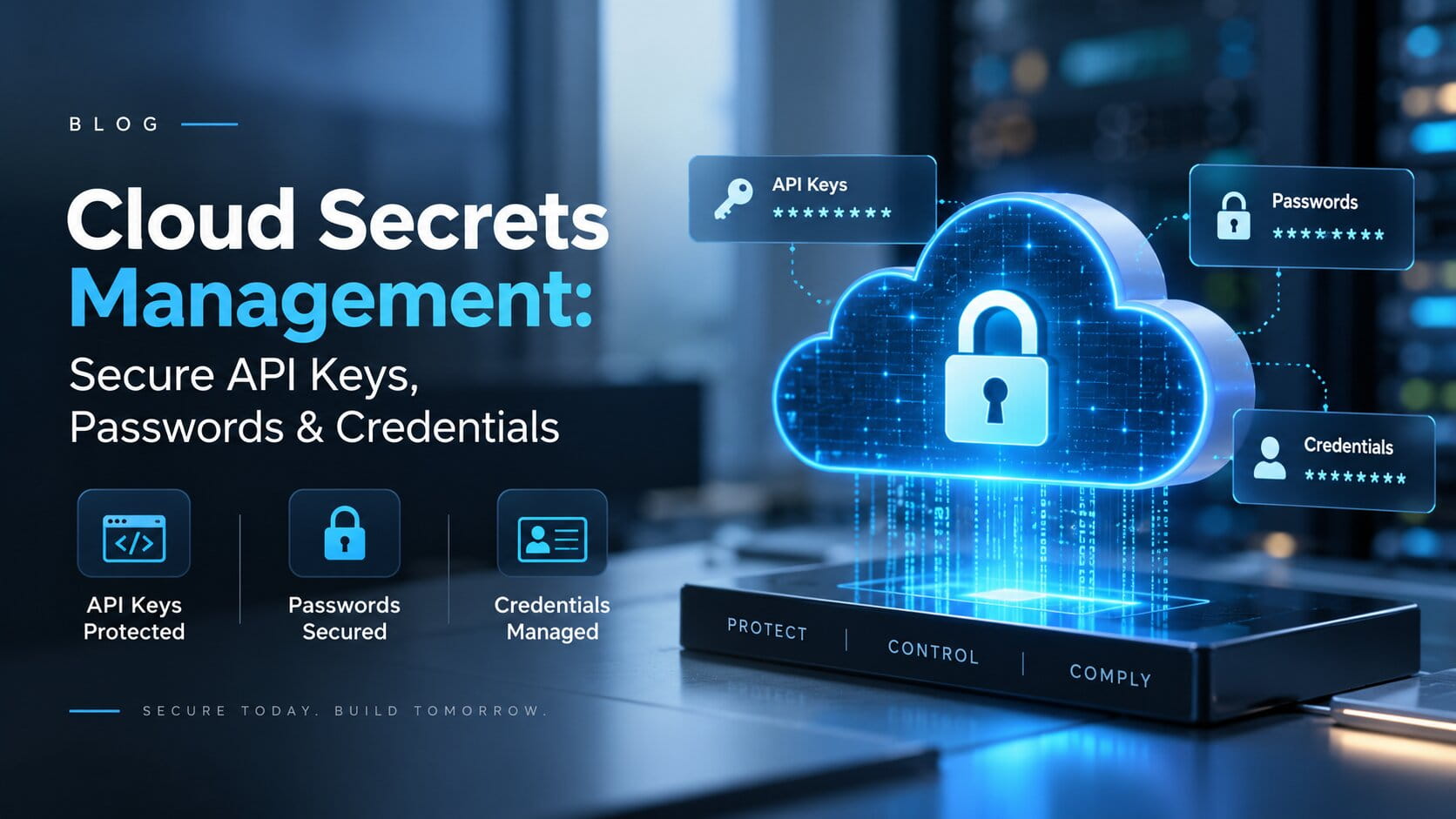
Cloud servers support websites, applications, APIs, databases, and business platforms. These systems rely on sensitive information such as API keys, passwords, access tokens, SSH keys, and database credentials.
However, poorly managed credentials can create serious security risks. For example, an exposed API key can allow unauthorized users to access an external service. Similarly, a leaked cloud credential can provide attackers with access to valuable infrastructure.
Cloud secrets management gives organizations a structured way to protect these credentials. It helps teams store, access, monitor, and rotate secrets without exposing them unnecessarily.
In this guide, you’ll learn how to secure API keys, passwords, and other credentials on cloud servers.
What Is Cloud Secrets Management?
Cloud secrets management involves securely handling sensitive credentials throughout their lifecycle.
A secret can include any piece of information that an application or user needs for authentication or authorization. Common examples include:
- API keys
- Database passwords
- Cloud access credentials
- SSH private keys
- OAuth tokens
- Encryption keys
- Service account credentials
- Application passwords
- Webhook tokens
Instead of placing these values directly inside source code, organizations can store them in dedicated secret-management systems.
As a result, developers can keep credentials separate from application logic while security teams maintain better control over access.
Why Do Cloud Credentials Need Protection?
Cloud credentials often provide access to important systems and services. Therefore, attackers actively search for exposed keys, passwords, and tokens.
A single compromised credential can create several problems. For instance, attackers may use a stolen database password to access sensitive records. Likewise, they may use a cloud access key to create resources, modify infrastructure, or steal information.
Credential exposure can lead to:
- Unauthorized account access
- Data theft
- Application disruption
- Cloud resource abuse
- Financial losses
- Service outages
- Compliance problems
- Wider security incidents
For this reason, businesses should treat every production credential as a sensitive security asset.
Secure Your Cloud Infrastructure With Expert Management
Protect your cloud environment, credentials, and critical infrastructure with proactive monitoring and expert cloud management.
How Do Cloud Secrets Get Exposed?
Organizations can lose credentials in several ways. Understanding these risks makes prevention easier.
Hardcoded Credentials
Developers sometimes place API keys and passwords directly inside application code. Although this approach may seem convenient during development, it creates a significant security problem.
If someone gains access to the code, they may also discover the credentials.
Public Git Repositories
Developers may accidentally upload .env files, configuration files, or source code containing secrets to public repositories.
Moreover, automated systems continuously scan public repositories for exposed credentials. Therefore, even a short-lived exposure can create a security incident.
Plain-Text Configuration Files
Some applications store passwords in readable configuration files. If attackers gain access to the server or an unauthorized user reads the file, the credentials may become compromised.
Shared Credentials
Teams sometimes share the same password or API key between several applications or employees. Consequently, one compromised credential can affect multiple systems.
Secrets in Logs
Applications may accidentally write passwords, tokens, or authentication information to log files.
Therefore, developers should review logging practices and prevent sensitive values from appearing in application or server logs.
Best Practices for Cloud Secrets Management
A strong secrets-management strategy combines secure storage, controlled access, monitoring, and regular credential rotation.
1. Never Hardcode Secrets
Keep passwords, API keys, and private credentials out of application source code.
Instead, configure applications to retrieve required secrets securely at runtime. This approach also makes credential updates easier because developers do not need to modify application code whenever a secret changes.
Furthermore, add sensitive configuration files to appropriate .gitignore rules and implement secret scanning in development workflows.
2. Use Secure Secret Storage
Environment variables can separate credentials from source code, and they remain useful for many applications. However, they do not provide every security control that production environments require.
For sensitive workloads, consider using a dedicated secret-management platform.
Common options include:
- AWS Secrets Manager
- Azure Key Vault
- Google Cloud Secret Manager
- HashiCorp Vault
These platforms can provide encryption, access control, auditing, versioning, and credential rotation.
As a result, organizations gain greater control over how applications access sensitive information.
3. Apply the Principle of Least Privilege
Applications should only access the secrets they actually need.
For example, a website may require access to one database credential. It does not need administrator-level access to the entire cloud account.
Therefore, create separate identities and permissions for different applications and services.
A practical model looks like this:
Application A → Database Secret A
Application B → API Secret B
Deployment System → Deployment Credentials
This approach limits the potential damage if one credential becomes compromised.
4. Rotate Credentials Regularly
Long-lived credentials increase security risk. If an attacker steals an old API key and the organization never changes it, that credential may remain useful for a long time.
Regular rotation reduces this exposure.
Organizations should establish rotation policies for:
- API keys
- Database passwords
- Access tokens
- Service credentials
- SSH keys
- Encryption keys
In addition, rotate credentials immediately when you suspect unauthorized access.
Where practical, automate rotation through your cloud platform or secrets-management solution.
Securing Secrets on Linux Cloud Servers
Linux servers commonly host websites, APIs, databases, and business applications. Therefore, administrators should pay close attention to credential storage and server permissions.
Restrict File Permissions
Only the required user or service should access sensitive files.
Review ownership and permissions regularly, especially for application configuration files containing credentials.
Protect SSH Keys
Store private SSH keys securely and protect them with strong passphrases when appropriate.
Also, remove unused keys and review authorized access regularly.
Avoid Credentials in Shell History
Do not place passwords or sensitive tokens directly inside command-line arguments when safer alternatives exist.
Shell history can retain commands, which may expose credentials later.
Monitor Server Access
Review authentication logs and access records for unusual activity. In particular, investigate unexpected login attempts, new accounts, or unusual administrative actions.
Cloud Secrets Management for AWS, Azure & Google Cloud
Major cloud platforms provide native services that can help organizations manage application secrets.
AWS Secrets Manager
AWS Secrets Manager allows organizations to store application credentials, database passwords, API keys, and other sensitive values.
Applications can request secrets through appropriate AWS identity permissions instead of storing credentials directly in source code.
This approach also supports controlled access and credential rotation.
Azure Key Vault
Azure Key Vault helps organizations manage secrets, encryption keys, and certificates.
Organizations can use Azure identity and access controls to determine which users and applications can retrieve specific secrets.
Google Cloud Secret Manager
Google Cloud Secret Manager provides centralized storage and access controls for application secrets.
Applications can retrieve required credentials through authenticated requests while keeping sensitive values outside application source code.
Although each provider uses different services and terminology, the security principle remains the same: give applications controlled access to only the secrets they require.
Protect Secrets in CI/CD Pipelines
Modern development teams often use CI/CD pipelines to build, test, and deploy applications.
These pipelines may require access to:
- Cloud credentials
- API tokens
- Container registries
- Deployment keys
- Database credentials
- Signing keys
However, developers should never place these secrets directly inside pipeline scripts.
Instead, use protected pipeline variables or integrate the deployment process with a dedicated secret manager.
Additionally, restrict deployment credentials according to environment and project. For example, development credentials should not automatically provide access to production infrastructure.
What Should You Do If a Secret Leaks?
A leaked credential requires immediate action.
1. Revoke or Rotate the Secret
Disable the exposed credential and generate a replacement as quickly as possible.
2. Investigate Access
Review authentication and application logs to determine whether someone used the credential.
3. Check Permissions
Identify every resource that the exposed secret could access.
4. Remove the Secret
Delete exposed credentials from source files, repositories, configuration systems, and other locations where they no longer belong.
5. Fix the Root Cause
Finally, determine why the secret leaked.
For example, the organization may need better developer training, repository scanning, access controls, or CI/CD security checks.
Common Cloud Secrets Management Mistakes
Even organizations with security policies can make credential-management mistakes.
Using One Credential Everywhere
Shared credentials increase the potential impact of a compromise. Instead, create separate credentials for different systems and applications.
Keeping Credentials Forever
Old credentials can remain active long after their original purpose disappears. Therefore, review and remove unused credentials regularly.
Giving Excessive Permissions
An application rarely needs unrestricted access. Apply least privilege to reduce unnecessary exposure.
Storing Secrets in Source Code
Source-control systems should manage application code, not sensitive production credentials.
Ignoring Logs
Security teams should regularly check whether applications accidentally record sensitive information.
Cloud Secrets Management Checklist
Before deploying an application to a cloud server, verify the following:
- Do not hardcode passwords or API keys
- Use secure secret storage
- Apply least-privilege permissions
- Rotate important credentials
- Remove unused accounts and keys
- Protect SSH private keys
- Secure CI/CD credentials
- Prevent secrets from entering logs
- Monitor credential usage
- Scan repositories for exposed secrets
- Create an incident-response process
- Review access permissions regularly
This checklist provides a practical starting point for improving cloud credential security.
Frequently Asked Questions
What is cloud secrets management?
+
Cloud secrets management is the process of securely storing, accessing, monitoring, and rotating sensitive credentials used by cloud applications and servers.
Is an environment variable enough to protect API keys?
+
Not always. Environment variables can keep credentials out of source code, but they do not provide all the security and auditing capabilities of a dedicated secrets-management platform.
How often should organizations rotate cloud credentials?
+
The appropriate schedule depends on the credential type, risk level, cloud environment, and organizational security policy. However, organizations should rotate credentials immediately after suspected exposure.
Can secrets management protect Linux cloud servers?
+
Yes. Proper secrets management can reduce credential exposure on Linux cloud servers. Organizations should also combine it with strong SSH security, file permissions, access monitoring, patch management, and network controls.
Should every application use the same API key?
+
No. Separate credentials provide better isolation. If one key becomes compromised, attackers will have less opportunity to access other applications.
Need Help Securing Your Cloud Environment?
Talk to our experts about your cloud infrastructure, secrets management, security, and ongoing support requirements.
-
Previous Post
How to Fix a 502 Bad Gateway Error?