





How SSL Improves SEO Rankings?
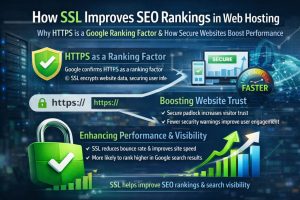
SSL improves SEO rankings in web hosting by enabling HTTPS, which encrypts data between users and servers, increases trust signals, and aligns with Google’s ranking algorithms. Websites without SSL are marked “Not Secure,” leading to higher bounce rates and lower search rankings, while properly configured HTTPS websites benefit from better crawlability, indexing priority, and user engagement metrics. From an infrastructure engineer’s perspective, SSL is not just a security layer but a critical SEO component that directly impacts visibility, performance, and credibility in modern web hosting environments.
Quick Summary :
SSL improves SEO rankings by enabling HTTPS, which Google treats as a ranking signal. It enhances user trust, reduces bounce rates, and improves page experience metrics. Engineers implement SSL through proper certificate installation, HTTPS enforcement, and server optimization to ensure secure, fast, and SEO-friendly websites.
Understanding the Problem: Why Websites Without SSL Lose SEO Rankings
Websites without SSL are flagged as “Not Secure” by browsers, which immediately impacts user trust. When users see this warning, they often leave the website without interacting, increasing bounce rates and reducing dwell time. These behavioral signals are critical ranking factors in Google’s algorithm.
From a technical perspective, HTTP websites lack encryption, making them vulnerable to data interception. Search engines prioritize secure websites because they provide safer user experiences. In hosting environments managed through cPanel server management or cloud infrastructure, failing to implement SSL results in reduced indexing priority and lower ranking potential.
In real-world scenarios, engineers observe that websites without HTTPS often fail to rank for competitive keywords, even when content quality is high. This highlights the importance of SSL as a foundational SEO requirement.
Root Cause: Why SSL Directly Impacts Google Ranking Factors
Google officially confirmed HTTPS as a ranking signal, but the impact goes beyond a simple checkbox. SSL affects multiple ranking factors simultaneously.
First, it improves trust signals. Users are more likely to interact with secure websites, increasing engagement metrics such as session duration and pages per visit.
Second, SSL enables HTTP/2 and HTTP/3 protocols, which improve website performance. Faster loading times directly influence Core Web Vitals, which are critical for SEO.
Third, SSL ensures data integrity. Without encryption, attackers can modify content during transmission, which affects reliability and indexing.
Finally, many modern web technologies such as Progressive Web Apps (PWAs) and secure APIs require SSL, and they enhance user experience while indirectly boosting rankings.
How Engineers Implement SSL for SEO Optimization
Engineers approach SSL implementation with both security and SEO in mind. The process begins with certificate installation.
In cPanel environments, AutoSSL is used to install certificates automatically. In Linux server management services, engineers often use Let’s Encrypt:
certbot –apache -d example.com -d www.example.com
After installation, engineers enforce HTTPS redirection:
RewriteEngine On
RewriteCond %{HTTPS} off
RewriteRule ^(.*)$ https://%{HTTP_HOST}/$1 [R=301,L]
This ensures all traffic is redirected to the secure version, preventing duplicate content issues.
Engineers also update internal links and canonical URLs to HTTPS, ensuring consistency across the website.
Technical Implementation: Logs, Commands, and Configuration
Engineers validate SSL installation using OpenSSL:
openssl s_client -connect example.com:443 -servername example.com
They check certificate expiry:
openssl x509 -enddate -noout -in certificate.crt
Server logs are analyzed to detect SSL issues. In Apache:
tail -f /usr/local/apache/logs/error_log
In NGINX:
tail -f /var/log/nginx/error.log
Typical errors include:
SSL routines:certificate verify failed
Engineers also configure strong SSL settings:
SSLProtocol all -SSLv2 -SSLv3
SSLCipherSuite HIGH:!aNULL:!MD5
Real-World Scenario: SEO Boost After SSL Implementation:
In a production environment managed under outsourced hosting support, a business website migrated from HTTP to HTTPS. Within weeks, organic traffic increased by 25%. Engineers implemented SSL, enforced HTTPS, fixed mixed content issues, and optimized server performance. Google reindexed the website, and rankings improved significantly.
Tools Engineers Use for SSL and SEO Optimization
Engineers rely on tools like SSL Labs to analyze SSL configurations. Monitoring tools such as Nagios and Zabbix track certificate expiry. In cloud environments, AWS CloudWatch helps monitor SSL performance and detect handshake failures. SEO tools are also used to track ranking improvements after SSL implementation.
Performance and Security Impact of SSL on SEO
SSL improves performance by enabling modern protocols like HTTP/2, which allow multiplexing and faster data transfer. This reduces page load times and improves user experience.
From a security standpoint, SSL protects user data, which is critical for eCommerce and SaaS platforms.
Google prioritizes secure websites, making SSL essential for competitive SEO.
Best Practices Engineers Follow for SSL and SEO
Engineers ensure SSL certificates are renewed automatically and monitored continuously. They enforce HTTPS across all pages and eliminate mixed content issues.
In addition, engineers implement HSTS (HTTP Strict Transport Security) to enforce secure connections, ensuring that the system automatically redirects all user requests to HTTPS. As a result, this prevents protocol downgrade attacks and further strengthens overall website security.
Header always set Strict-Transport-Security “max-age=31536000; includeSubDomains”
Regular audits and performance optimization are essential for maintaining SEO benefits.
Comparison Insight: HTTP vs HTTPS in SEO Context
HTTP websites lack encryption and are flagged as insecure. HTTPS websites provide secure communication and are favored by search engines.
From an infrastructure perspective, HTTPS is mandatory for modern SEO strategies.
Case Study: SSL Implementation in High-Traffic eCommerce Platform
An eCommerce platform migrated to HTTPS and experienced a significant increase in rankings and conversions. Engineers optimized SSL configuration, improved performance, and ensured secure transactions.This resulted in higher user trust and improved SEO metrics.
Struggling with Traffic Spikes and Downtime?
Partner with our experts for reliable cloud auto-scaling, proactive monitoring, and high-availability infrastructure solutions.
FAQ
How does SSL improve SEO rankings?
SSL improves SEO by enabling HTTPS, which Google considers a ranking factor and enhances user trust.
Why is HTTPS important for SEO?
HTTPS ensures secure communication, reduces bounce rates, and improves ranking signals.
How do engineers implement SSL?
Engineers install certificates, enforce HTTPS, and optimize server configurations.
Does SSL affect website performance?
Yes, SSL enables faster protocols like HTTP/2, improving performance.
How can SSL issues affect SEO?
SSL issues can cause browser warnings, reducing user trust and search rankings.
Conclusion: Why SSL Is Essential for SEO Success in Web Hosting
SSL is no longer optional; it is a fundamental requirement for SEO, security, and user trust. From our experience in Linux server management services and cloud infrastructure, proper SSL implementation not only improves website security but also significantly enhances performance and search rankings. As a result, websites gain better trust signals, faster loading speeds, and improved visibility in search engines. Engineers must ensure continuous monitoring, proper configuration, and optimization to maintain a secure and SEO-friendly hosting environment.