



Overview
For a long time, VPNs were treated like the gold standard of remote access. If someone connected through the VPN, they were considered “inside” the network and therefore safe to trust. That model worked when offices were fixed, users were limited, and applications lived in one place.
That world is gone.
Today, employees work from homes, cafes, airports, client sites, and personal devices. Cloud apps, SaaS platforms, remote servers, and hybrid infrastructure have broken the old perimeter model. Yet many businesses still use VPNs as if nothing has changed. And that is exactly what attackers are counting on.
A VPN can encrypt traffic and create a secure tunnel. It can still be part of a secure setup. But it should no longer be treated as a free pass into the network. Once a user connects, too many environments still trust them too much. That is where the risk begins.
The new rule is simple: Never trust. Always verify. Only allow what is needed. That is the heart of Zero Trust Network Access (ZTNA).
The Problem with Legacy Security Models
Most businesses were designed around an old security idea: if a user is inside the network, they are trustworthy. That approach made sense when employees worked from one office and systems were mostly on premises.
But now:
- users connect from everywhere
- Endpoints are often unmanaged
- Cloud services are spread across multiple platforms
- attackers are using stolen credentials instead of brute-force firewalls
- one compromised login can expose a whole environment
VPNs were built to create secure remote access. The problem is not encryption itself. The problem is what happens after connection.
Many organizations still give VPN users broad network access once they authenticate. That means if an attacker steals one set of credentials, compromises one device, or finds one misconfigured VPN account, they may get more access than they should.
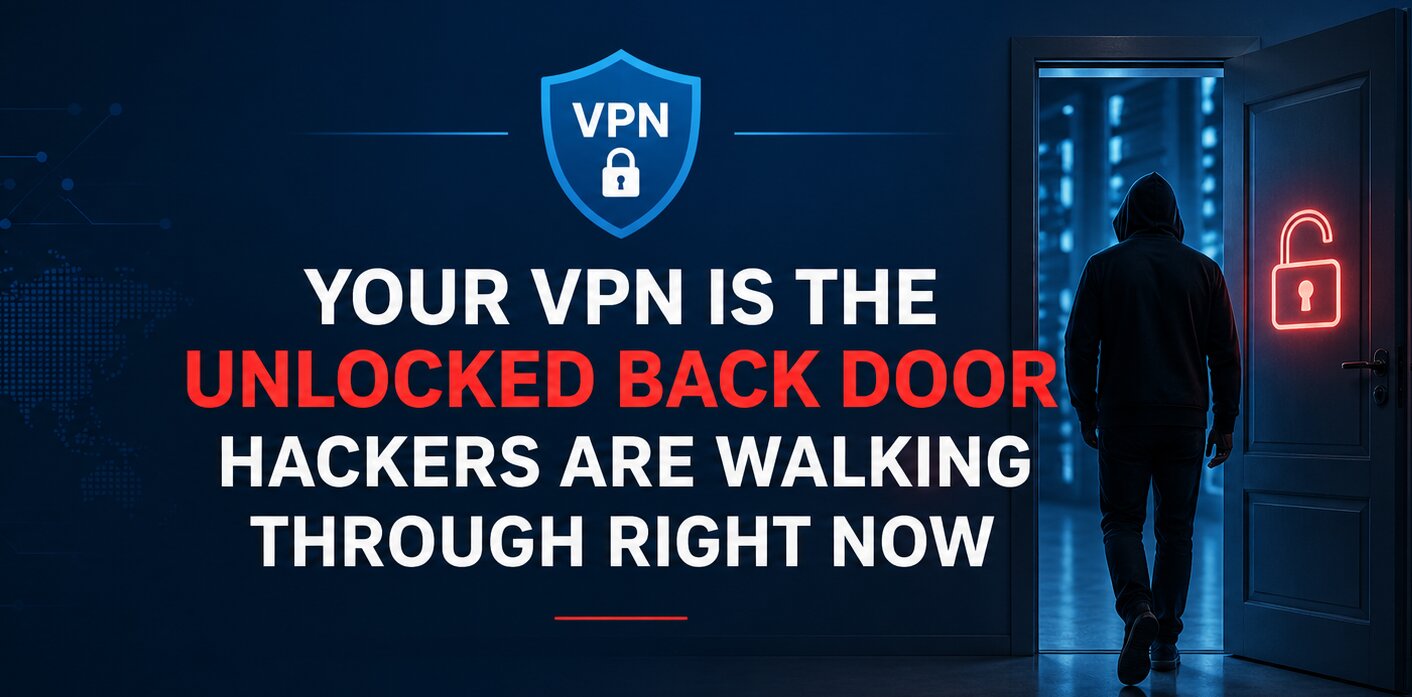
That is the unlocked back door.
Why VPNs Became a Weak Point
Managed Server Support
Is your server access still running on VPN-only trust?
Our server management team helps you audit, harden, and monitor your infrastructure — so one compromised login never means a full breach.
VPNs are not “bad.” That would be lazy thinking, and lazy thinking is how security teams end up on incident calls at 2:00 AM.
The issue is that VPNs were designed for a different era. They assume:
- internal users are mostly trusted
- the network boundary is enough protection
- access can be broad once identity is confirmed
- perimeter security is the main defense
That model falls apart in modern environments.
Common VPN weaknesses include:
-
Overly broad access
A user connects to the VPN and suddenly can reach far more than they need.
-
Credential theft
If an attacker gets a username and password, they may enter the network the same way a legitimate user does.
-
Lateral movement
Once inside, attackers can move across systems if segmentation is weak.
-
Unmanaged endpoints
A VPN does not automatically secure the laptop, phone, or browser being used.
-
No continuous verification
Traditional VPNs often check identity once at login, then trust the session for too long.
That is the flaw. Trust is granted too early and revoked too late.
The Modern Threat: Attackers Love the Old Model
Hackers do not need to break a network if they can log in through a trusted path.
That is why stolen credentials, phishing, MFA fatigue attacks, token theft, and compromised devices are so dangerous. They bypass the front door instead of breaking it down.
Once inside a VPN, attackers may:
- scan internal systems
- access shared resources
- find weakly protected servers
- move from one service to another
- steal sensitive data
- disable defenses
- sit quietly for weeks before acting
The scary part is not speed. It is invisibility.
A VPN session can look perfectly normal while an attacker is exploring your environment from the inside. That is why perimeter trust is no longer enough.
The Better Model: Never Trust. Always Verify. Only What They Need.
This is where Zero Trust changes the game.
Zero Trust is not a product. It is a security model built on one core idea:
Do not trust users, devices, or sessions by default. Verify everything continuously.
The three rules that matter most:
- Never trust automatically
- Always verify identity, device, and context
- Only grant the minimum access required
This is where ZTNA comes in.
What Is ZTNA?
ZTNA means Zero Trust Network Access.
It is a modern access model that gives users access only to the specific applications or systems they need, not the entire network.
Instead of saying:
“You are on the VPN, so you are inside.”
ZTNA says:
“Prove who you are, prove your device is safe, and only then access the one resource you need.”
That is a major shift.
ZTNA typically uses:
- identity verification
- device posture checks
- contextual access policies
- app-level access instead of network-wide access
- continuous authorization
This reduces exposure dramatically because users no longer get broad internal access by default.
VPN vs ZTNA: The Real Difference
Traditional VPN
A VPN creates a tunnel into the network. Once connected, users may have access to multiple internal resources.
ZTNA
ZTNA gives access to specific apps or services only after verifying identity, device health, and access rules.
Why is ZTNA better:
- less lateral movement
- smaller attack surface
- stronger control over who accesses what
- better fit for cloud and hybrid environments
- more useful for remote work security
This does not mean every VPN disappears tomorrow. It means the old trust model needs to stop acting like it still owns the room.
What Businesses Should Do Now
Security needs to move from broad trust to precise control.
-
Stop giving full network access when it is not needed
If a user only needs one application, do not give them the whole internal network.
-
Move toward application-level access
ZTNA gives access to specific apps, not the entire environment. That is a cleaner, safer model.
-
Enforce multi-factor authentication everywhere
Passwords alone are not enough. If one password gets stolen, the rest should not collapse.
-
Check device health before granting access
A secure identity is not enough if the device itself is compromised.
-
Segment your environment
Even if someone gets in, they should not be able to move freely across systems.
-
Monitor access continuously
Verification should not happen only once at login. It should keep going.
-
Replace trust with policy
Access should depend on user role, device status, location, time, and application need.
Practical Zero Trust Security Framework
If a business wants to move away from risky VPN dependence, here is the practical roadmap:
Identity
- use strong authentication
- enforce MFA
- remove shared accounts
- review inactive users regularly
Device
- allow access only from approved or healthy devices
- check antivirus, OS version, and patch status
- block risky endpoints
Access
- grant only the access needed for the task
- remove broad internal network exposure
- use application-specific policies
Monitoring
- track unusual sign-ins
- detect impossible travel or abnormal login behavior
- review access logs routinely
Response
- be ready to revoke access instantly
- isolate suspicious sessions quickly
- update policies as attack patterns evolve
That is what modern access control actually looks like. Not glamorous. Just effective.
How Actsupport Supports Businesses in Implementing ZTNA Solutions
Implementing ZTNA requires more than just purchasing a security tool. Businesses need strong infrastructure support, secure server environments, continuous monitoring, and technical expertise to make Zero Trust strategies successful.
This is where Actsupport helps businesses.
With expertise in remote infrastructure management, server administration, cloud support, cybersecurity services, and 24/7 monitoring, Actsupport helps organizations build the operational foundation needed for successful ZTNA implementation.
-
Strengthening Infrastructure Before ZTNA Deployment
Before implementing ZTNA, businesses need to assess whether their servers, applications, and cloud environments are ready for secure access transformation.
Actsupport helps by:
- auditing server environments
- identifying infrastructure vulnerabilities
- optimizing network architecture
- preparing cloud systems for secure access implementation
This ensures businesses don’t implement ZTNA on weak infrastructure.
-
Securing Remote Access Environments
Traditional VPNs often provide broad network access, which increases security risks.
Actsupport helps organizations shift toward a Zero Trust model by:
- securing remote server access
- limiting unauthorized access points
- implementing role-based access controls
- improving authentication security
This helps businesses create safer remote work environments.
-
Continuous Monitoring and Threat Prevention
ZTNA requires constant monitoring to identify unusual access behavior and prevent threats.
Actsupport’s proactive monitoring services help businesses:
- monitor servers 24/7
- detect unusual activity
- prevent downtime
- respond to infrastructure issues quickly
Their proactive server monitoring capabilities are already part of their service offering.
-
Supporting Cloud-Based Zero Trust Environments
Many businesses are moving applications and workloads to cloud platforms.
Actsupport helps organizations secure cloud environments through:
- cloud infrastructure management
- migration support
- performance optimization
- secure cloud access management
This makes ZTNA implementation more effective for hybrid and remote teams.
-
Ensuring Business Continuity and Data Protection
Zero Trust strategies also require strong backup systems and recovery planning.
Actsupport supports this through:
- backup management
- disaster recovery services
- business continuity planning
- infrastructure resilience support
Why This Matters
ZTNA is not a plug-and-play solution. Businesses need the right infrastructure partner to successfully implement and manage it.
Actsupport helps organizations bridge that gap by providing the backend infrastructure, monitoring, and security support required to make Zero Trust strategies work effectively.
Cloud Infrastructure
Moving to Zero Trust? Your cloud environment needs the right foundation first.
We help businesses secure cloud workloads, migrate safely, and build the infrastructure backbone that makes ZTNA strategies actually work.
Conclusion
VPNs are not the enemy. Outdated trust models are.
The real risk is not that businesses still use VPNs. The risk is that too many still assume a VPN login equals safety. It does not.
Attackers love environments where one successful login opens too many doors. That is why the security conversation has moved toward Zero Trust and ZTNA. The future of secure access is not “connect and trust.” It is “verify, limit, and monitor.”
If your security model still treats the network like a castle wall, you are already behind. The better approach is simpler and stronger:
Never trust. Always verify. Only what they need.
That is how modern businesses reduce exposure without slowing down work.